The Play in Roleplay

“Something need doing?”

Those 3 words might seem random to you, but to me they represent an entirely imagined concept. In Warcraft 3, when you selected your first unit playing as Orcs, the Peon, out of the random responses,  my favorite of which was this line. Why? Because in one simple three word line, delivered in a cookie monster meets naive but disgruntled laborer voice, it gave the feel of an inspired character.

imageedit

And that in itself is inspiring. The above image shows a post to the forms of a fantasy roleplay server I played on, where you might meet someone playing a character inspired in part by our Peon example; Or perhaps a different, full-of-themselves Drow who’s mostly racist against Orcs, stereotyping all of them to be similar to the aforementioned Peon. The point is: in order to play, we must let ourselves be inspired, and order to create play we must create the inspirational. Take the website Storium for example – A complete convergence of D&D meets new-age online collaboration, this site has allowed the laws of play to be made malleable for any participant or creative. And yes, there’s enjoyment to be had in the creation of lengthy texts.
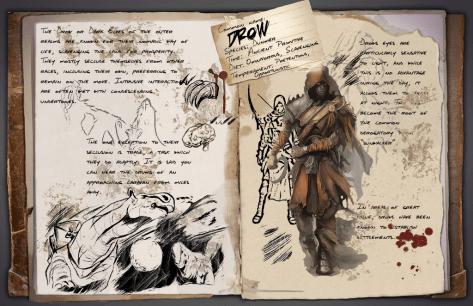
drow

So then lets explore for a moment, these two images posted. If willing, I encourage you to read through them, then tell me what your inferred impression of the character I created, “Reyn Sylvar” is?
 

Level Design – Start to Alpha, Brink of Ruin

Well met!

Well, actually this isn’t Hearthstone. But I do bring you another snippet from a pleasurable game I had previously worked on, Brink of Ruin. If you were a fan of how we broke down Seagulls, you might like a snippet of some of the images describing the level layouts for Brink of Ruin!


Early Design

https://docs.google.com/document/d/16qjJ_3icWM1Jt03bfavOLDtKro-H1LTmxZpVsnn93Yw/edit?usp=sharing


Concept / First Iteration

https://docs.google.com/document/d/1dmSRBBLvQ1jVt0eR25XvoQGDcxJ3DZkJ4LYotjxizkw/edit?usp=sharing


Early Alpha

https://docs.google.com/document/d/1a5E13Q-caveHla7bIoBS2uSW9sP8kLZnU9dHvIJ0Ydk/edit?usp=sharing


Here’s another cool snippet of the design to come on our Forest level copied from our Game Design Document:

Environmental Mechanics

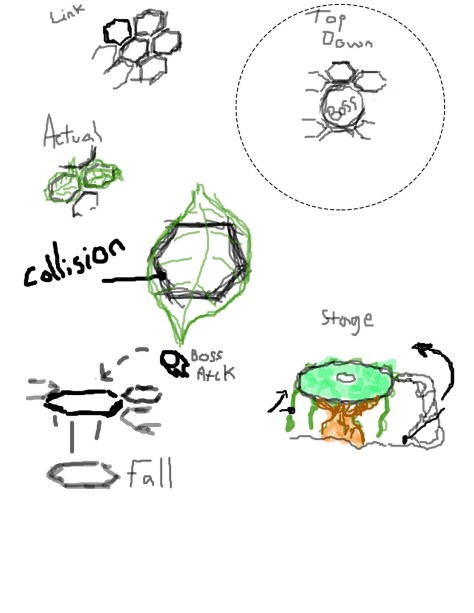
  • Falling Platforms (forest)- Tree-top leafs connected in hexagonal shapes may be knocked out by certain boss attacks, causing the player to take damage and fall outside of attack range to a lower layer.

image39

Figure 2.0 – a design draft of the ‘falling leaves’ mechanic. Leafs function as platforms, collision based off of invisible connected hexagons, that when hit by certain boss attacks, fall to a lower level of the stage. Players make climb the ramp back up, or have allies break pods that contain ‘vines’ teammates can climb back up on for a limited time. Boss is located in the center of the stage.


Arkana – Mod for Ark!

Greetings!

I am excited to announce that after much development and mastery of the Ark dev kit, we are in the Pre-alpha release stages of a mod for Ark: Survival Evolved.

Introducing Arkana, the mod that adds ancient lore and magic to be discovered. Because nothing adds to a world of dinosaurs, like spitting some giant fireballs.

ArkanaMod

Check it out!

http://steamcommunity.com/sharedfiles/filedetails/?id=893486309

Team:

Just me. For now.

Images:

Global Game Jam 2015!

One does not simply walk into a Game Jam. No, it felt more like we floated in. We had 24 available hours to start on a project at the Melrose Center Downtown Orlando and have it submitted. I worked with a team of various local professionals and had an amazing experience to say the least.

GGJ2015 Submission:

http://globalgamejam.org/2015/games/stormrunner

How to play:

  •  You have 3 bars: Food, Fuel and Durability. Don’t let any of them falter!
  • Spacebar is a handbrake.
  • Use WASD or arrow keys to move in a direction.
  • You receive a score based on how long you survive!

Something New In the Works

There was talk in shop about searching for new ways to self-inspire games, and many ideas were thrown out. Like most conversations about new projects, the vision fell flat and was beginning to dud. But not to this pair of eyes.

There was some general concerns throwing out the typical game design document, and while they were legitimate concerns, how do we truly know what works best for us if we never explore? So I set out on a journey to create, err… well, something.

Expectation was low, excitement high, and before I talk about what came out of it (Because it’s still being prototyped), the experience has been unfathomably exceptional. Freedom, antonymous work, blissful stirring of ideas instead of sleeping,  self-education, itch-scratching satisfaction, all these words come to mind when I think back a month ago when I started this project. I hope you all are looking forward to this prototype as much as I am, I’ll be posting it, along with another project, called Ascend, which I had wonderful opportunity to be a lead designer for shortly.

Ascend Preview: Concept Slides

Special thanks to Brenda Cruz and Eddie Anacleto for the Art shown here.

Conceptualization of Ideas

So when designing anything where do you begin? Well for many people, they would say iterative design is a thing, and that you should work in steps to get there. I don’t disagree with that, but before you can really get your hands dirty, you need somewhere to start – and for game designers working on a team (99%! 99%!), that means documentation. Just make sure to have your TPS reports in by Monday.

Seagulls reference art
Seagulls reference collage

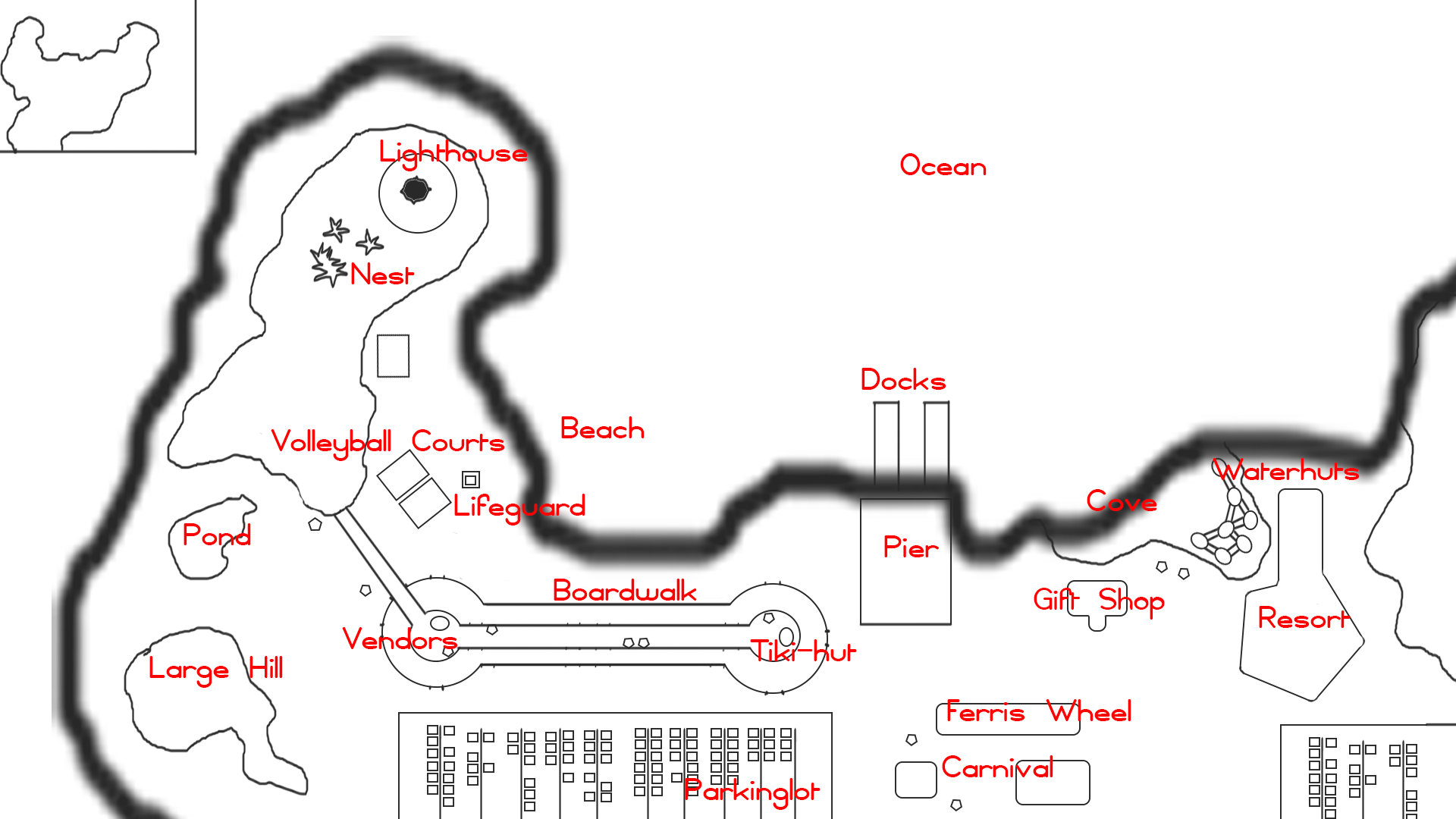
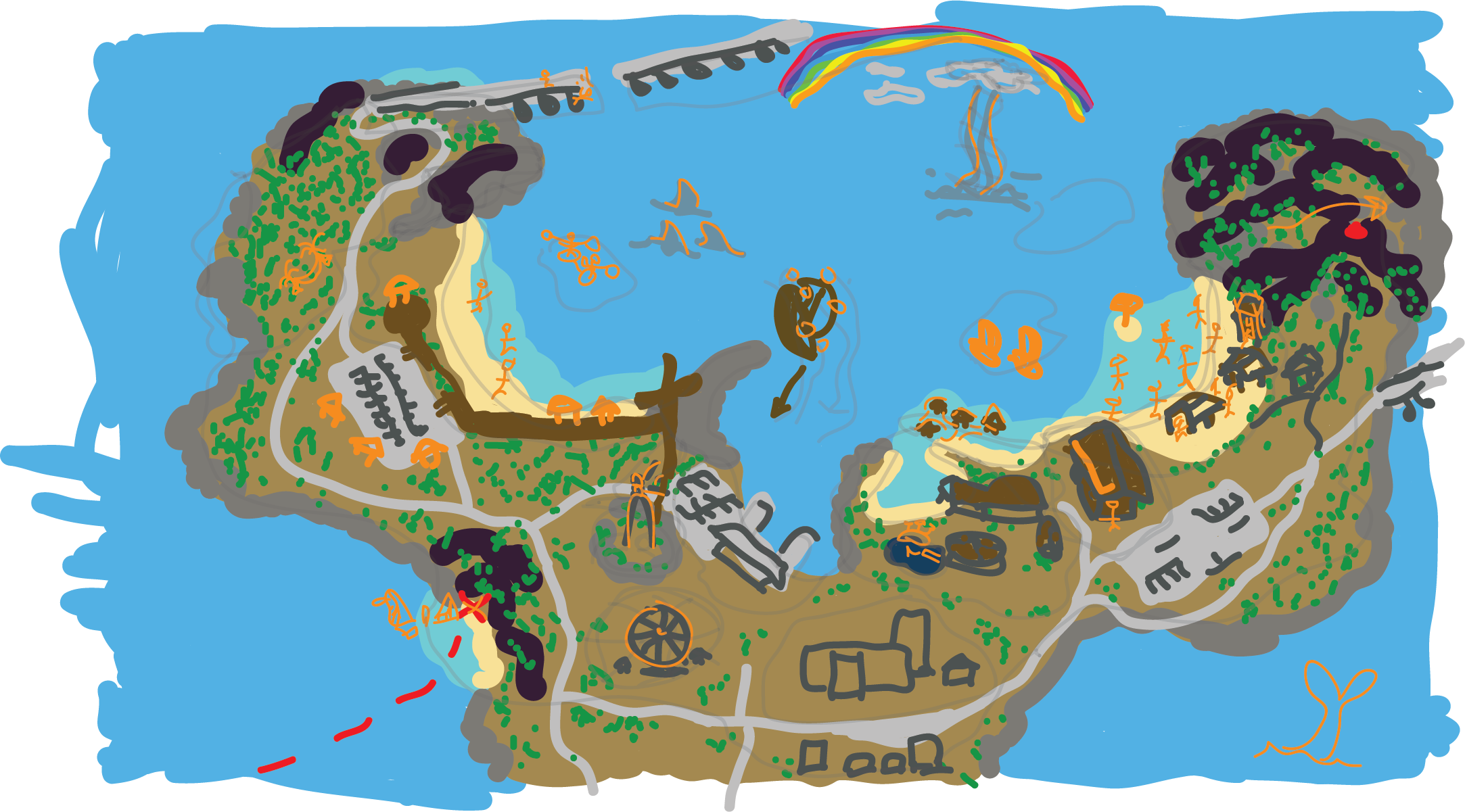
So let’s pretend for a moment, you are working on documentation, and you are tasked with submitting a concept for a game using a somewhat familiar environment that people know.  – Let’s say, oh I don’t know… an environment for Seagulls. Immediately, (hopefully) you probably pictured Seagulls flying around a beach or pier, being annoying perhaps, maybe trying to steal some tourists lunch, or just keeping to themselves.

level1outlinev3


Then, what exactly is the next step to get that idea fully conceptualized into documentation? A question I also asked myself. Being early in my career as a designer, I didn’t have an answer to that question right away. So for me, I found asking questions to be more helpful then searching for answers.

template1

“What is interesting about this area? What can the player interact with here? What is the purpose behind having seashells on the beach when the player is in the sky? What vertical distinctions can be created  for our player to explore while in that sky? What if our player poops on this object? Or in a nutshell, What is the intention?

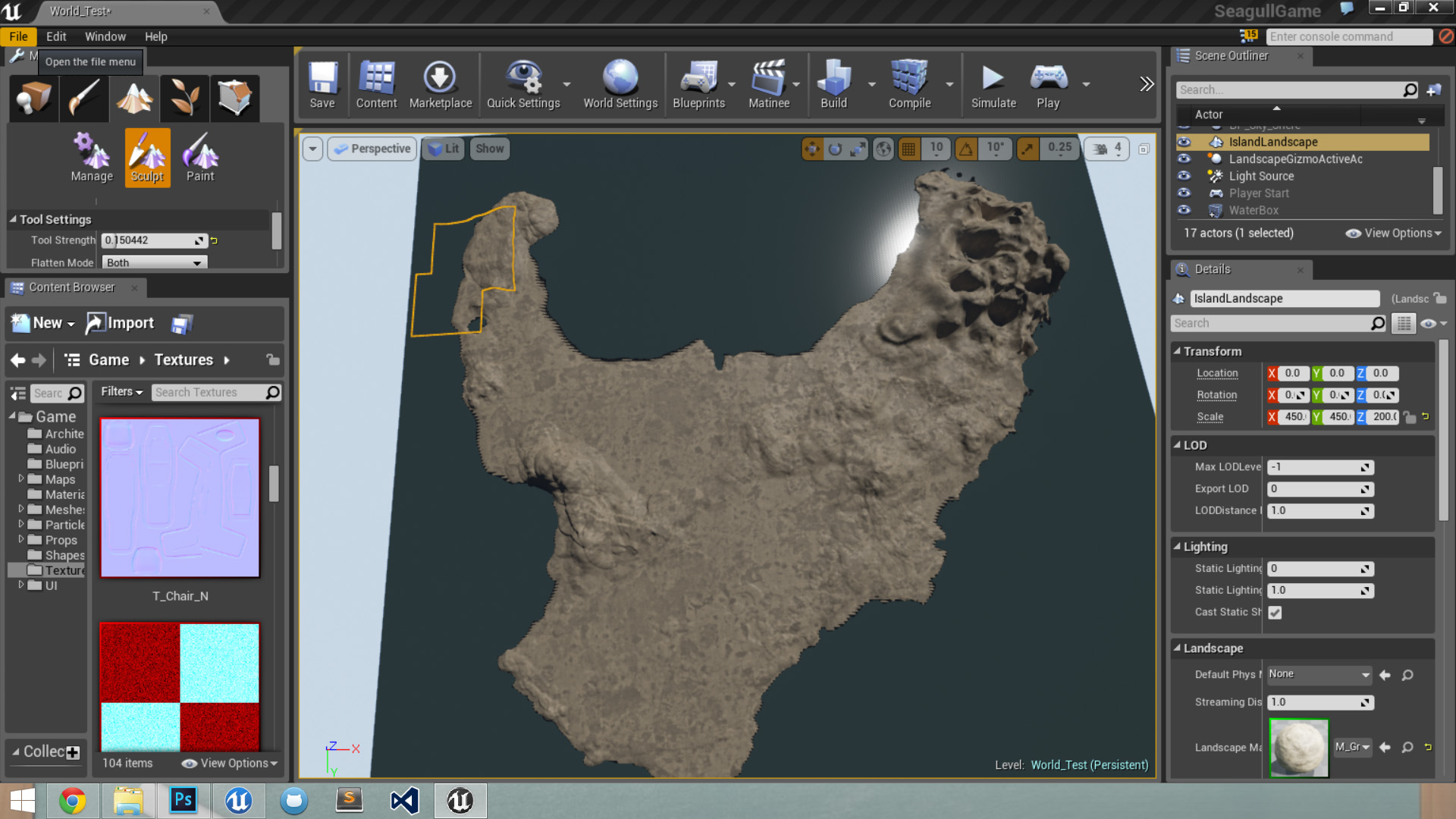
terrain

Without realizing it, I had discovered a series of questions which eventually guided me to my new found design mantra: ‘What is the intent behind what I’m trying to design, and how can I convey that intent?’ 

landscape

Perhaps you don’t agree with that being a strong mantra, and that’s okay. But to me designs start with intention, because all choices start with an intention, and designs, much like when you do anything in real life, start by making  a choice.

Island


Seagulls – Prototype Beta release!

Caw! Caw!
Sorry, it could not be resist, as that’s the sound I heard in my head for the last 3 months of performing dive-bombs, candy burglary, and all the while saving some birds for my latest project, Seagulls. Yeah you heard me. Seagulls. What is Seagulls? Thanks for asking Mr.Sounds-like-broken-english rhetorical question. Seagulls is an 3D open world, 3rd person perspective flying adventure with a sense of humor, featuring a cinematic driven single player story, and competitive splitscreen multiplayer gameplay. Even in current prototype stages, it’s come along way from it’s original ‘QWOP’ styled wing control, to its goofy flying and theme, that doesn’t take itself too serious, and it will swoop the fun right out of your hands! But the opposite of that, so… it’s a positive thing. It will swoop the fun into your hands! But don’t take my word for it, try it out yourself!

More @ https://twitter.com/SeagullsGame